It’s said that a picture is worth a thousand words. And in the world of product development and marketing, compelling visuals are critical. But does it matter if that picture is taken with a camera or computer generated?
The power of visualisation
Images are typically the first thing your customer notices, and they play a huge role in how your product is perceived. Humans are visual creatures; we love looking at images, and in fact we process visual images 60,000 times faster than text.
In product marketing, decent quality images are essential. Without them, you’ll struggle to sell. Look at the example below, notice how the product on the left is less appealing because there is no product image. The neighbouring product images show familiar branding and packaging to entice customers to click and buy.
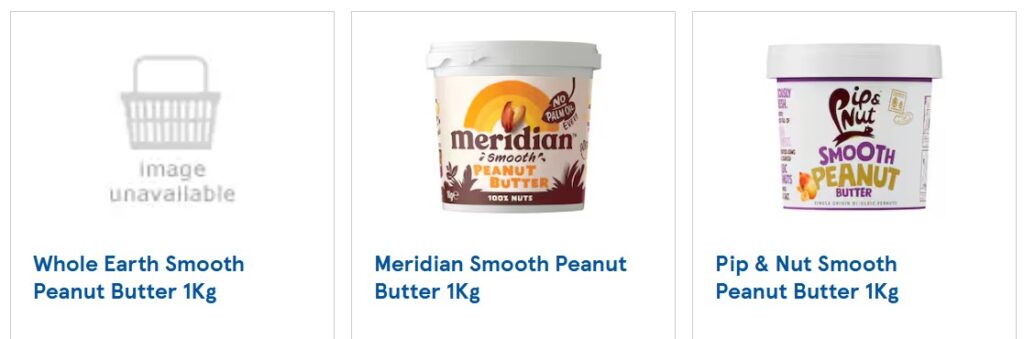
Traditionally, photography has been the go-to solution for product imagery, but the rise of CGI (Computer Generated Imagery) has opened new doors – particularly for businesses looking for speed, flexibility, and creative freedom.
So, what’s the real difference between traditional photography and CGI? And why are more companies turning to CGI for product visualisation? Let’s explore.
Photography: Tried and True
Traditional photography has been used since 1850 to advertise and sell products, and today it still has its place. Photography captures real-life products using cameras, lighting setups, and often professional studios. It’s a tangible process – the product needs to be fully manufactured, styled, and physically present during the shoot.

There are definite strengths here. Photography offers:
- Realism and authenticity: Nothing beats the natural play of light on a real object.
- Emotional connection: Real-life settings and models can create an immediate sense of trust and relatability.
- Simplicity: For businesses with finished products and straightforward visual needs, photography remains a practical choice.
However, photography also comes with challenges. You’re limited by location, lighting conditions, and physical constraints. Complex setups or re-shoots can be time-consuming and expensive – and if your product isn’t ready yet, photography simply isn’t an option.
CGI: The Future of Visual Storytelling
CGI, on the other hand, involves creating photorealistic images using 3D modelling and rendering software. Unlike photography, you don’t need a physical product to get started – which opens up a world of possibilities during product development and beyond.
Here’s why more companies are choosing CGI:
1. Cost-Effective and Scalable
With CGI, once the 3D CAD model is created, it can be repurposed across a variety of media – product shots, animations, exploded views, even interactive 3D web content – without additional photoshoots. This makes it a highly scalable solution, especially for product lines with variations in colour, size, or configuration.
2. Ideal for Pre-Launch Marketing
Need to start marketing before your product is manufactured? No problem. CGI allows you to visualise your product long before it’s physically produced, helping you build anticipation, secure pre-orders, or pitch to retailers early in the development cycle.
3. Total Creative Control
Want to show your product underwater? Floating in space? Exploded into its component parts? CGI gives you unlimited freedom to create visuals that would be difficult, or impossible, to achieve with traditional photography.
4. Consistent Brand Imagery
With CGI, you can ensure perfect lighting, angle, and environment for every shot. That consistency is crucial for creating a unified visual identity across platforms, particularly for e-commerce, packaging, and advertising campaigns.
5. Interactive Product Configurators for E-Commerce
As online shopping continues to grow at a rapid pace, consumers expect more interactive and personalised experiences. This is where CGI truly shines. Using 3D models, companies can create interactive product configurators that allow customers to customise products in real time – choosing colours, materials, finishes, and more.
Whether it’s a chair available in ten fabric types, a laptop with customisable specs, or a piece of industrial equipment with modular components, CGI-powered configurators offer a dynamic way to explore options online. This not only improves user engagement but also helps reduce returns by giving customers a clearer picture of what they’re buying.

With more people shopping online than ever before, providing a rich, visual, and customisable experience is no longer a luxury – it’s a necessity. CGI makes this possible in a way traditional photography simply can’t.
CGI and Photography: Better Together
While CGI offers clear advantages, traditional photography still has its place. Lifestyle shoots with real models and environments still rely on the human touch. In fact, many brands use a hybrid approach – combining CGI for clean product visuals and photography for emotive, lifestyle-driven content.
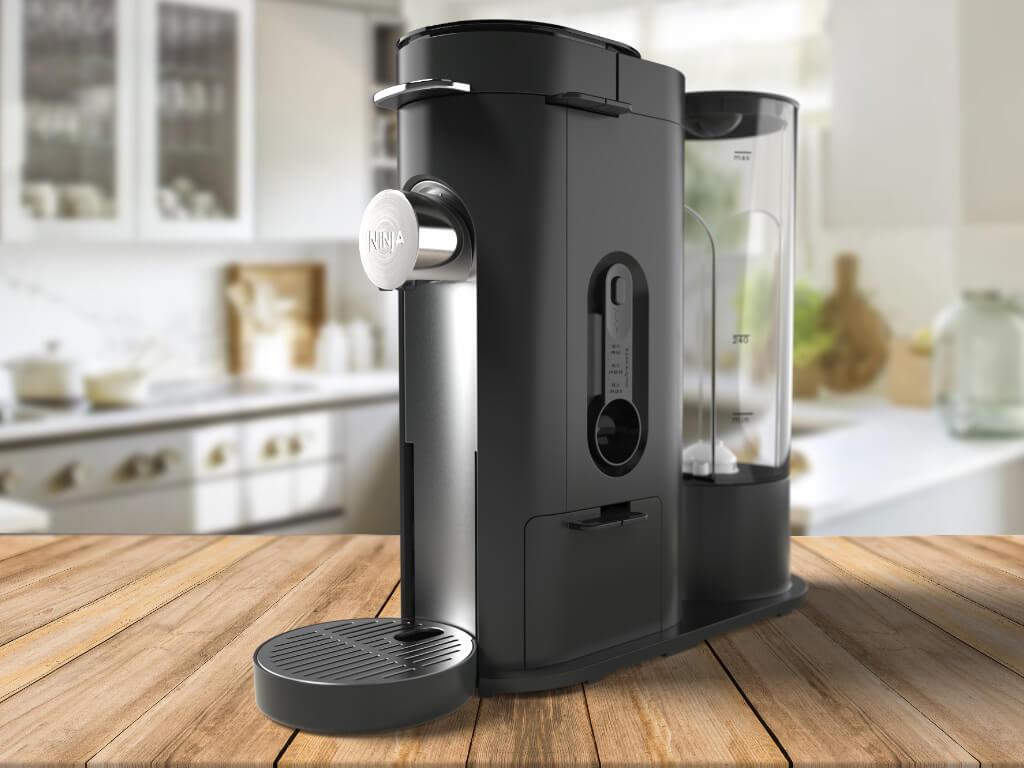
At Cornelius Creative, we offer end-to-end product development services, including CGI that supports every stage of your product’s lifecycle. Whether you need concept visualisations for internal buy-in, configurator-ready models, or high-end renders for your latest marketing campaign, our team helps you bring your ideas to life – even before your product hits the shelves.
In Summary
The choice between traditional photography and CGI isn’t about which is better – it’s about which is right for your needs. For flexibility, speed, interactivity, and scalability, CGI is hard to beat. For authenticity and emotional resonance, photography still holds its own. When used strategically, they can work together to enhance your brand and support your product’s success.
As e-commerce and online product searches continue to rise, CGI gives you the tools to stay ahead of the curve.
Next Steps
Ready to explore how CGI can elevate your next product launch? Get in touch with Cornelius Creative today and discover the future of visual product marketing.
Recent Posts

What are the Differences Between Traditional Photography and CGI?

Introducing Breakdown Buddy: A New Era of Roadside Safety

Using Customer Pain Points to Drive Product Innovation

The Rise of Fractional Work, and How It Could Transform Your Company

SolidWorks: The Secret to our Product Design Success

How to Patent an Idea in the UK

SBS Event 2025: Our Exciting Key Takeaways from Birmingham

Why We Changed Our Company Values

The Power of Visuals: How Computer-Generated Images Drive Product Sales